Categories
Writings

Firework for W. G. Sebald

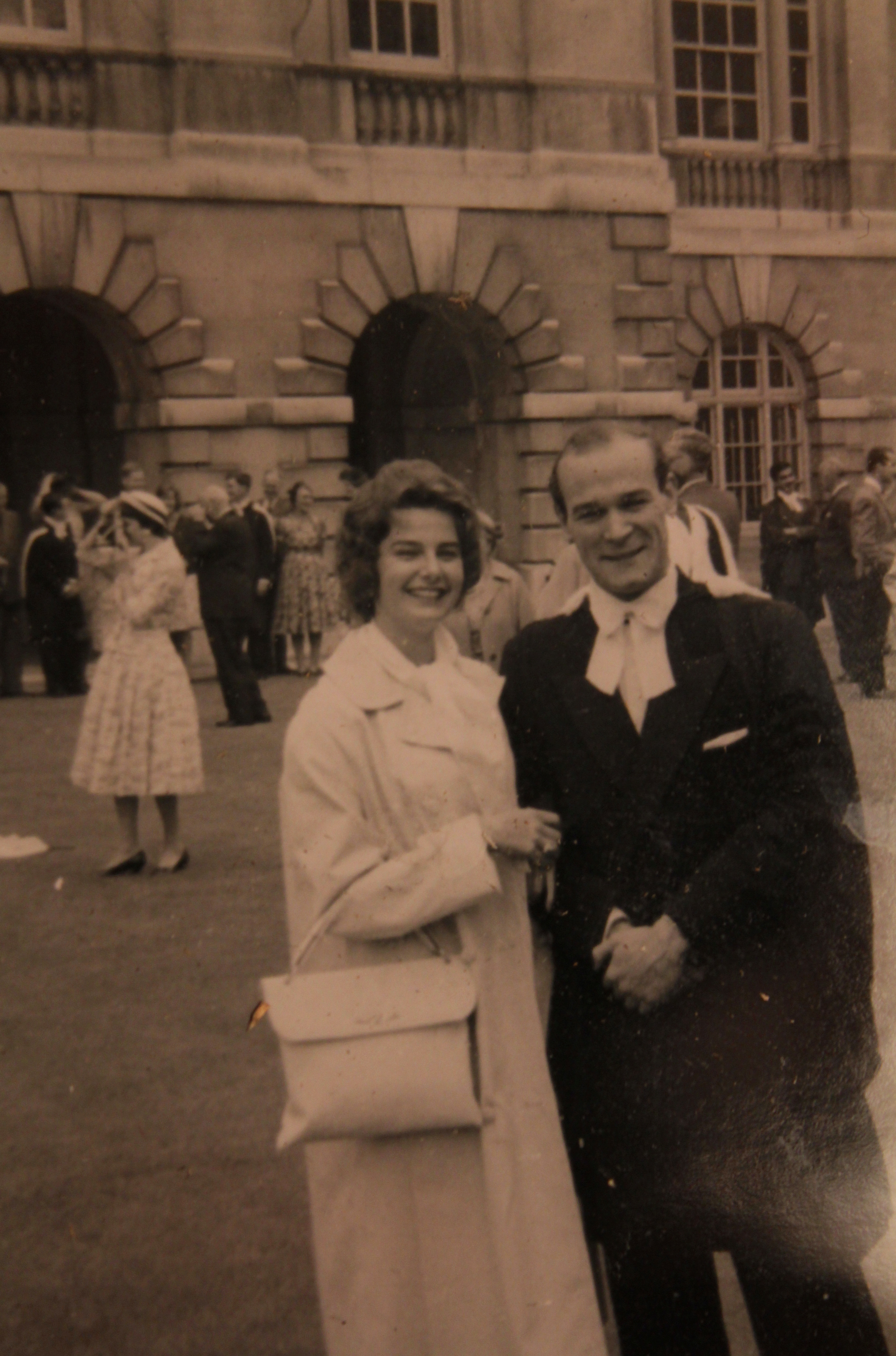
Mum & Dad cambridge (1)

The air was chill this morning. A clear sky. The stars bright and the moon, a fat crescent, shone white. My finger tips, in black leather gloves, stung with the cold.

A girl, barefoot and coatless, stands outside the Pier Pressure nightclub. Excuse me, she calls out to me gesturing with an unlit cigarette, do you smoke? No, I say, I’m sorry I don’t. Later, as I come down Great Darkgate Street, I see her at the far end of Terrace Road. Bye, she is shouting to a friend. Byeeee!. I walk behind her as she runs, still barefoot, down Llanbadarn Road.

A loaf of bread has been spilt outside Lilley’s Coffee Shop, slices of white scattered on the pavement.

The seabirds on the shore faced landwards this morning. Was it because of the cold?

Last night in bed I heard a chit chit sound, was it a chaffinch?

The light is on in Coral bookmakers, it isn’t yet 5.30 am.


We finished watching the film. I’m sure it wasn’t the same one, he reiterated. Melancholy aids creativity, one of the talking heads claimed. Only children really feel a sense of home, another said, it is a romantic notion. The artist Jeremy Millar (I think that was his name) made a series of photographs of fireworks that he had let off on the spot where Max Sebald died. Only the smoke remained. With the last one they superimposed an image of Sebald’s face. The smoke emulated its contours exactly. A sleight of hand, a cheap trick. Possibly.

I took a heavy sadness to bed with me. And slept fitfully, dreaming of Dad. I have a sketch of him that I have pinned on my studio board. It is a small pencil drawing that I made just before he died. He looks immobile, gone inward.

Penelope Wilton talking about her character in one of Alan Bennett’s Talking Head series, on Radio 4’s Reunion. She’s a timid woman, with a very large inner life that expresses itself in her garden.

I didn’t manage to write away the greyness. Not today.


Categories
Writings

Patience (2)

2010-02-02 10.45.18

I write a list of food. It is awkward. It is such a private thing. And yet, food is a site of love. We cook for others, for ourselves, with love. But it is the ingesting. We have so much while others have so little. It has become complicated, we have lost our ease with it all. I buy rhubarb, great long fat sticks of it. I love its tartness. What will you have with it, he asks, custard? No, no custard. I just like it cooked as it is. No sugar. The taste of metal in my mouth, furring my teeth. And there were broad beans, too. So many, all for a pound. I am sorry for the farmer. I shall shell the rest and freeze them. Such abundance. I am thankful. Look at all the colours. What a joy.

Will they understand? I was brought up to be thankful, to finish my plate. To eat what I was given and be grateful. A site of love and site of power, of control. The turkey fricassee and my sister pretending to gag. For what we are about to eat may the Lord make us…. At every meal time at school. We said it off-pat. Who will say grace? Grace, anybody?

I see them on these dark mornings, massing on the sea shore. A mass of sea birds. Gulls and terns and oystercatchers. They stand on the sand facing the sea, in silence, waiting. My thrown shadow can stir them, one will screech, maybe shift a little. Mostly, they stay still, waiting. Each on their own piece of ground, close to one another but separate. In communion. Safety in numbers.

Excuse me, a man driving a white jeep called out to me. Sorry to bother you, but is there somewhere I can get petrol near here? I was almost home. He took me by surprise. I was looking inward, cocooned. It took ages to find my voice, to pierce through that membrane of inwardness. The words stumbled out. Was it left or right? Thanks, he said, and drove off.
We’re watching it again, that film about Max Sebald. I don’t think its the same one, he said, there was definitely a motorbike, though I do remember the picture with the bodies, though not the one with the fish. It’s called Patience. Jonathon Pryce is the narrator. I remember him at Stratford-upon-Avon, years ago, on stage astride a motorbike. Taming of the Shrew. His voice is like syrup. In Britain we walk to recover, one of the contributors says, whereas in America they walk to discover. What about my walking? What am I doing? A little bit of both. I walk things out and yet, I also walk inwardly, finding, looking for something inside. Feeling the warmth within and the cold without.

I went to sleep with the cold air on my face. I was woken by a gust of wind.

The wind was strong this morning. No one was about. I enjoyed the solitude. Too windy for a brolly. So be it, though I don’t usually like rain on my face. So be it. The wind blew me dry. Blow dry.

They offered him refuge in Canada. He doesn’t want to go. Not now. He wants to remain in Syria, to be beside the grave of his wife and children. Was that him crying on the front of the paper? Won’t you try? Is all lost? I cannot imagine such grief. Is there anything we can do? Is there anything to be done?

I want to do something about it now, he said. I will offer my homes to four refugee families NOW, he said. He has two spare, in London and in Kent. Now. He is angry again. He acts. He inspires action. The Independent had a montage of people holding handwritten placards – welcome refugees, welcome. They cried when they got to the border. We are welcomed here. We are welcome. You are welcome. Come. Find refuge. And you, my love, and you.

Categories
Writings

Postcards

Letters Home, (Red) 2007 - detail (2)

We often see her on the Perygyl, on her maroon mobility scooter. She is generally parked right at the end staring out to sea. Her legs are water-logged, her hair blowing in the wind. She is large woman. Her bags are balanced on the scooter, a handbag in the basket at the front. When we pass her, as we did yesterday, she is writing postcards. She holds a wodge of them in her hand, using it to rest upon. Who is she writing to? Is she describing the scene? When the dolphins have been there she will say that she’s seen them. She doesn’t write then just stares out to sea, wrapt. Good afternoon, we say. Afternoon, she says. Though sometimes she ignores us. That’s OK, I say to him.

Sometimes it is a wrench to go out into the dark. I wrestle with my fear particularly when I see figures coming towards me. This morning I heard them but didn’t see them. Their voices were warm, they would be no threat. I move past, my senses sharpened. I walk down the middle of the road. I always do when I’m wary. It is away from the bushes, the leaf cover. I stride. Soldier, he called after me. On the Prom there is another figure. A student I think. He has headphones on, he doesn’t look at me. A bad sleeper perhaps. Lonely. I haven’t seen the smoker for a while. When it is dry there is often more people about. By the new bandstand two men walk towards me. My stomach dips. There is something. Good morning, I say, trying to take control. They walk past me and then one of them shouts out, do you want sex?

No, thank you, I reply and keep walking.


Categories
Writings

Seagull shit

Inchoate, 2004

I’m a domestic animal. I believe I’ve said that before. I like the comfort of home. I like the comfort of a routinous home. I clean on Fridays, do the ironing, change the sheets. Regular. As clockwork. It grounds me. Everything feels tended to, taken care of, in place. I know that it is symbolic act. An act of imposing order on something that is not ordered. Can never be.

Don’t look at the front page of the newspapers today, he said. I know, I said, I heard it on the radio. The little Syrian boy, washed up on the beach. I looked by mistake. For all the warning it was still a shock. They are killing thousands every day in Syria, he says. I know, I thought, but this is one story, one story that tells it all. And we are all responsible. Responsible for every action perpetrated in this world. This world of ours.

I caught a glimpse of him, face down in the water. I want to hold you. I want to breathe life back into you. Make you warm again. What can I do?

I smooth a bedspread, plump a cushion and then write. I write myself clean. Again.

There’s an article in yesterday’s Times. Does Boarding School harm you for life? Well, what do they say? I ask him over breakfast. Does it? Yes, he says, though not you. It didn’t harm you. They are just experiences. We can choose how much they touch us, later. Sometimes you just have to hold your breath till it is over. He couldn’t though. He couldn’t. Rest in peace, little one.


I’ve finished the book. His writing is so compelling. So bleak. That’s it, the character Hold had said to himself after he was shot. So that’s it. That’s death. That’s the end. Is there light? Is there relief? From all that bleakness. Cynan Jones writes vicerally – his characters feel rather than talk. I want to be responsible for the death I inflict, says Hold to himself, as he kills a rabbit. Responsiblity for one’s part played. In it all.


We finally had the windows cleaned. And yesterday’s wind brought more seagull shit, across two levels of windows. Long, slanting, dashes of white spit. I can clean the lower level ones but not the top. The rain doesn’t clean it away. They will remain there till next time. It doesn’t matter. Not in the whole scheme of things. Live with it. I shall live with it. Shall I make a drawing? A tracing. Turn it into something beautiful?


Autumn is coming. I had to wear a scarf this morning. The trivial and the important. Who’s to tell which is which? We flit to and fro, sometimes sacred sometimes profane. It is our role to live out our alloted days. Until. Until? Peace?

Rest in peace little one, rest in peace.

Categories
Writings

Dog Roses turning to hips

Bedroom Fragments (1) - detail

We were sitting on our seat in the wall. I’ve been reading this journalist in The Independent, he said. He writes a column about Nature. He’s really good. And he says that as far as Nature is concerned the end of August is the beginning of Autumn, not September. It starts when the birds start to emigrate. You mean migrate, I said. Yes, he said, whatever, anyway it was really interesting. He says that you can tell because the birds don’t sing anymore because they’re not mating anymore. The only birdsong you will hear will be the robin clicking.

In the Castle park the dog roses are turning to hips. My mother used to give my youngest sister rose hip syrup when she was a baby. The few remaining roses still smell sweet. I stood still in the dark and watched the black cloud forms scud over the sea. Nothing else moved. The only sounds were the screech of distant gulls and the dripping of raindrops from the petals of the hydrangea bush.

Two men stand in the doorway of the betting shop. Lights ablaze. One smokes. They stare right through me. It is not yet 5.30 am.

The man with the too-short trousers was back again today. Chapels again? I ask. Yes, he says, I’m answering a query about last time. Water, I ask. No thank you, he replies, I have my own, brandishing a half-filled bottle of what looks like Ribena. Do you know, years ago, he says, I had to go to the studio in town and the man who was meeting me forgot all about it. We had to re-schedule it for later in the day. He laughs. Cheerio then, he says.

He tells me he was accosted by a woman on Chalybeate Street. She’d called out his name and dashed across the street. She told me she’d been in school with Effie, he says, said she was Nesta Williams’ sister. I have absolutely no idea who she is. Though of course she’s not going to look the same after all these years, he says. Said she’d always lived in Aber, except for when she was studying in Cardiff. Mind you, she’d told him, its always been an arsehole of place hasn’t it?

Categories
Writings

Eat Life to the Full

Bedtime Stories, 2009 - detail (2)

As I walk I notice that the Pier Pressure nightclub’s lights are on.

Three lads stand about at the junction for Terrace Road. Here, one of them says, pointing to the small dark-haired one, why don’t I carry you on my back. He bends over and gestures to him. Two girls and boy are walking towards me as I pass the Bandstand. The boy is giving one of the girls a piggy-back. She says something in his ear and giggles. He drops her to the floor. You knob, he shouts, laughing, you knob head. She turns her back to him, still giggling. He slaps her hard on her bottom. Her large buttocks, tightly held in white denim, judder with the force. Come on, says the other girl, let’s do this at home.

The giant security man from yesterday is standing in the doorway, smoking a cigarette. A paper coffee cup rolls on the pavement.

Coming down Great Darkgate Street I notice what looks like woman in the doorway of Thompson’s Travel Agency. She has shoulder-length permed hair and wears a dark navy fleece. We make eye contact. Take a message, Sergeant Major, sir, she shouts at me. Is she talking to me? I smile as I walk past. She continues to shout. I can’t make out what she is saying. Her voice echoes through the dark.

There is a Cornish pasty wrapper on the ground. Eat life to the full, it reads.


I feel privileged to have been a thinking being on this beautiful planet, Oliver Sacks is said to have said when he knew he was dying.

Rest in peace.

Categories
Writings

Dog Walking in the Dark

The Gift, 2002 - Nigel Cassidy

We wake early, at three, study, do our work and then retire at eight, the Dutch monk from Caldey Island, is telling the interviewer on the radio.

Mostly I walk in silence. It is what I walk for. In the early morning. There is a young girl walking a small wire-haired terrier. The girl’s hair is a white mass in the dark. It is not yet 5 am.

I am walking along the Prom towards the Pier Pressure nightclub. It’s lights are still on. The silence of North Road and the north end of the promenade has been broken. Walk away, Mike, a woman is shouting. There are a cluster of people at the entrance to the club. Two of OW’s taxis, their engines running, wait at the roadside. There is a smell of heat, cigarettes and beer. Walk away, Mike, she shouts. Now, Mike, walk away. A large, stout man is pushing his chest against a giant security man in a yellow high-vis jacket. Walk away, says the security man. Walk away or I’ll put you on the ground. He is static. A rock, a boulder of a man. He looks down at the man, who is Irish, unflustered, unshaken. The Irishman pushes forward, his head waving, reeling, his fists raised. Walk away, Mike, the woman continues to wail, walk a-fucking way, she shouts. WALK A-FUCKING WAY! I am now by the castle. Walk away, Mike, she keens, dragging him away up Pier Street. Walk away.

Coming past the castle playground and along the walk-street to The Angel, a young man turns into the street by the Clock Tower, singing a Charlie Rich song. Hey, did you happen to see the most beautiful girl in the world? He is smiling. And was she crying, crying. Hey. I remember a holiday spent in Menorca and playing Dad’s cassette tape of country love songs. And Mum, so tense, so on edge.


A white feather is momentarily suspended in the black, night air.

To aim for perfection would make life too serious, intones the Dutch monk. Earlier on the radio, the writer A. N. Wilson talked about Iris Murdoch. He hated the film. It made her look like a derelict, he says. She became just a Alzheimer’s sufferer, nothing else. He thinks that the fact that she knew she could only be a mediocre philosopher brought it on.

I want to write about the film that Terry Pratchett hosted about assisted death. I’d put off watching it. There is something so private about dying, it felt voyeuristic. And yet, to have denied myself the vision of such grace would’ve have been a sadness. The man died with such acquiescence – drinking the poison. You must drink it like this, said the doctor, straight down, if you sip it you will only sleep. His wife had brought some chocolates to help take away the taste. Which one shall you have, she asked, the praline? He had such manners. Thank you, he said to everyone. It has been an honour. He died snoring. He has gone to sleep, the Dignitas helper said to his wife. You can cry now. You’ve been holding it all, let it out now, it will do you good.

If I have to go that way, may I have white sheets?

The other night I dreamt I was interviewing David Cameron. Oh, no, he was saying, we set that picture up. Later there was a swan, its wings beating through the sky towards me.

Sometimes phrases play out in my head. Life is a profound act of forgiveness, it is saying.

Categories
Writings

Owl

Under the Stars - EMI 2015 (cropped) (2)

I woke for a pee about 1 am. I heard an owl but it wasn’t the usual twit-ter-woo sound, it was more of a wit-wit without the woo. Bird noises reverberate in the night air, making the black seem infinite, endless. Everything appears intensified, though perhaps it is that my senses are more alert. Leaving for my walk at 4.45 am one of our neighbours came in to the hallway. He was carrying one of those polystyrene food containers. The smell was of re-heated baked beans. Oh, hello, he said, tottering. We both paused. Bye, then, I called out. It all felt a little strange. Where had he been? And perhaps he was thinking, Where is she going? Yesterday, at about the same time, two taxis drew up outside in the courtyard off-loading a family of bodies. The usual hush was broken as they giggled their way into houses.

I finally got round to listening to the repeat of Maya Angelou with Anthony Clare, In The Psychiatrist’s Chair. She was spellbinding. Her command of language, that slow way she had of delivering every word was mesmeric. But she was soaked in sadness. Drenched in it. And yet, there was always that courage of hope. Some people’s lives are fit-to-bursting.

My to-do list continues. Next is the film Terry Pratchett made about assisted dying.

I’ve got two alarm clocks on my bedside table. One works, the other is rather unreliable but I like its loud tick so I keep it.

A spider has drawn a line of light across the outside of my bedroom window.

I am writing myself clean. It is good to have a project. Does it really matter if it is any good? And what is good, or indeed, bad? I will write myself good. Yes. That’s it. That is it.


Categories
Writings

Joan Hickson

Photo detail (2) - Talk to Me

A new film came. What is it? he asked. An Agatha Christie, I replied, with Joan Hickson. Oh, great, he said, I love Joan Hickson. Is she dead? I suspect so, I said, this must be from the 70s or 80s.

I love Joan Hickson, too. She reminds me of Nanny Clarke. There’s something so safe about her, I said as we sat down to supper. She is so solid, so no-nonsense, so unsentimental. Nanny was the same. I miss her. She ended up in a home, went a little do-lally.

He called Harry Daniels. I’d cajoled him into doing so. Don’t rush me, he said. But he did it anyway. Well, what did he say? I asked. It’s still 1800 quid. What, I said, even without the funeral. Yes, he said, after all they’ve still got to deal with the body. Yes, I suppose they do. You could do some of it yourself, I suppose, use a wardrobe instead of a coffin, deliver it in an estate car and whatnot, but someone’s still got to embalm it. Yes, I know, I said. I know. It’s not easy getting rid of matter, is it? There is something so weighty about it all. Of course, traditions have to be respected. And the body respected. But when we’ve gone, we’ve gone. It’s only the symbols that are left. I just don’t know. I don’t know how I will feel when he goes. He is all to me. And yet, I can and must see life without him.

I like this community. I like its sounds. Peter below us with his odd hours, smoking through the window and racking cough. And his mother, Margaret, a sharp-faced lady of ninety-odd. She talks of her five children with pride. And still walks into town each day. Are you renting or buying? she barked at us when we moved in. She softened a little under his charm. Besides he went to school with Peter and knew her other son, Snowie. I offered her a lift up the hill, he said, but she was having none of it. And the others? A mixture of young and old. I like to see the windows lit up at night. I feel like I belong to something interesting. Each flat is distinctive, with its own history. Did I tell you that this used to be a school? His old school. He went to see his old girl friend yesterday. I did my A levels in your living room, she said, when he told her where we’d moved to. I’ll come over and see it. No, he said. No, you won’t. We don’t have visitors. Why not? she asked. Because we’re private people.

Was it difficult to say no to her? I asked. Yes, I felt uncomfortable in my chest, he said. Pete (her husband) understood, he said. That’s good, I said.

Categories
Writings

Making

Ellen Bell:Photography by Simon Cook 01736 360041


..the choice of a book presented some difficulties, since when she was writing she could only read something she had read before…(Anita Brookner, The Hotel du Lac)

Why do you do it? he said, why do you read such stuff? You’re too sensitive. Yes, I say, I know, but it’s just the writing is so good. We were talking about Cynan Jones, Everything I Found on the Beach, and its main protagonist who works in an abattoir. And then, I think, perhaps I shouldn’t, not because of the subject matter which is distressing (though Jones, is never lurid for the sake of being so) but because of the way it may influence my own writing. I feel like a sponge sometimes, still so uncertain of my own voice, my own way of being even, that I soak up what I read and reflect it back. Is this good? Is this the way to learn, like trainee painters copying the old masters in the National Gallery, stroke-for-stroke, imbibing the knowledge. I just don’t know.

My back is rigid with the fear of this present encounter. The encounter of myself as writer and all that I do not yet know about what I can and can’t do. Just write. Just write your one thousand words a day. That’s all you have to do. OK. I will. And then? Wait and see. You have to get it down first. Yes, I see that. I can see that. Do I read in the meantime? And if so, what? There was a programme on the radio the other day about the woman who typed Jean Rhys’ manuscript of her biography, Smile Please. It made me want to read it. I want to feel in safe hands, present with someone who I know can write. So this is how you do it. Now, I understand. And yet, will I be intimidated? Struck numb, dumb by their brilliance? Is it best, as does Edith Hope in Hotel du Lac, to stick to more familiar landscapes, to reread what I already know? I could return to Philip Roth, reread the memoir of his father’s death or to Richard Mabey and his beautiful book about depression. I’ve given them both away. All to often I end up having to rebuy books. Don’t tell him, will you?

Two twins in the gym yesterday. Lithe as gazelles. Are you dancers? I wanted to ask. First they went on the treadmills, then the step machines, before going into what is called the ‘Ladies Gym’ to do their routine. They slump down of the floor to check phones between moves.

We went to Cardiff yesterday to see Art. Art in the making. Oceans of rain pelted down on our car as we drove over the mountains. I slept and woke, slept and woke. In one of my semi-waking dreams I saw a sign by the side of the road. You are mystified, it read. See that tree, he said, it’s going to fall down. Another dream. A full moon is due on Saturday. Is that why we were both tetchy.

Fragile. The National Museum was chock-a-block. Kids everywhere. Running around like mice. Shouting and screaming. It was joyful and manic at the same time. The Ladies toilet was full of four-year olds in yellow high-vis waistcoats with Foundation Fun Day written on them in pen. Two teachers were standing there directing them into the cubicles and counting their heads. It was hot and clammy.

It wasn’t there. The piece we had driven 100 miles to see. I was disappointed. Clare Twomey’s artwork has been temporarily removed, said a sticky label attached to one of the walls. Not even a ‘sorry for any inconvenience’.  So be it. There were compensations. The shelves of Edmund de Waal forms that made me long to make again. The Picasso jug. The Claire Curneen angels dripping gold. And that fact that it was quiet in there. Children were stopped at the door. A hand up. No running. Hold their hands, please.

I like going to galleries with him. He is open, he is curious. He reads everything, wanting to understand. Did you know this? he asks. No, I say, no, I didn’t.

Shall we eat in the car? I ask. I don’t think I can stand the noise any longer. We do and do half The Guardian crossword. It’s good to get away, we say, but so good to get home. Yes.

He remembered Dolly this morning on the way to Morrisons. And I turned round and what’sname, she said, he said. What’sname, he said, what’sname. God, she was funny. Do you remember when she put her hand up to her mouth to take out the fag and there wasn’t one there? Yes, I remember. Such a long time ago.